Why You Should Start a Forest Garden
Calendula's Garden is reader suported This post may contain affiliate links, more on our Disclaimer page. Thank you!
Imagine strolling through a thriving woodland where the air feels refreshingly cool, the soil is rich and soft beneath your feet, and plants flourish effortlessly without human intervention. What if you could replicate that natural abundance and resilience in your own backyard?
This isn’t a fantasy. It’s called forest gardening. Unlike traditional agriculture, which often involves fighting against nature to grow rows of single crops, forest gardening works with nature.
It mimics the structure of a natural forest to create a productive, low-maintenance ecosystem that yields food, medicine, and joy.
I tend to blend forest gardening with raised garden beds. I place the raised beds and grow bags within the forest to take advantage of the dappled shade and higher humidity.
For beginner gardeners looking to embrace sustainability and grow healthy food for their families, forest gardening offers a resilient solution.
It moves away from the back breaking labor of tilling and constant weeding, guiding you toward a method where nature does the heavy lifting. Whether you have a sprawling acreage or a modest suburban lot, you can cultivate a thriving edible landscape that supports local wildlife by incorporating forest garden techniques.
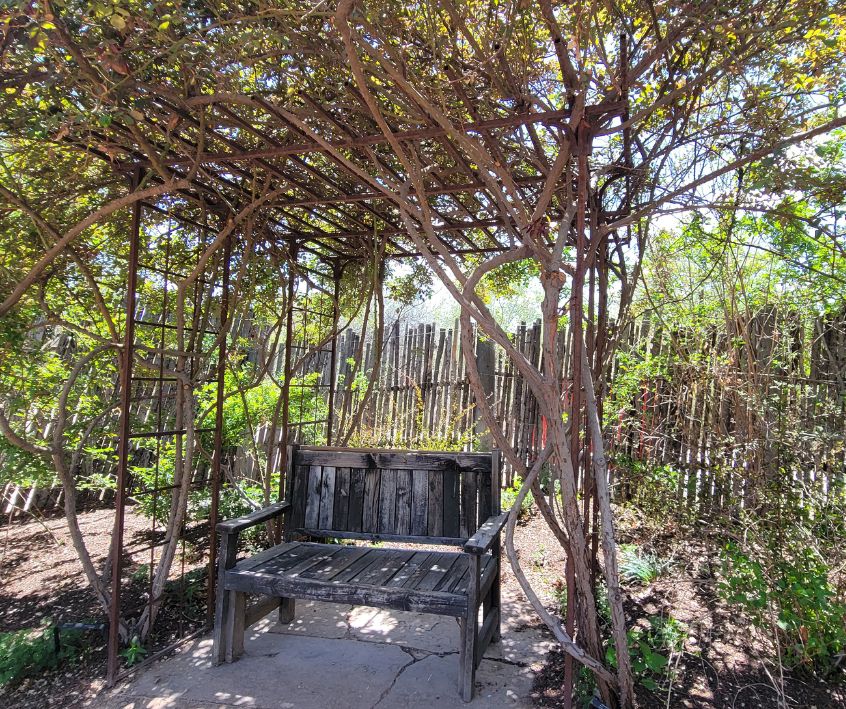
What is Forest Gardening?
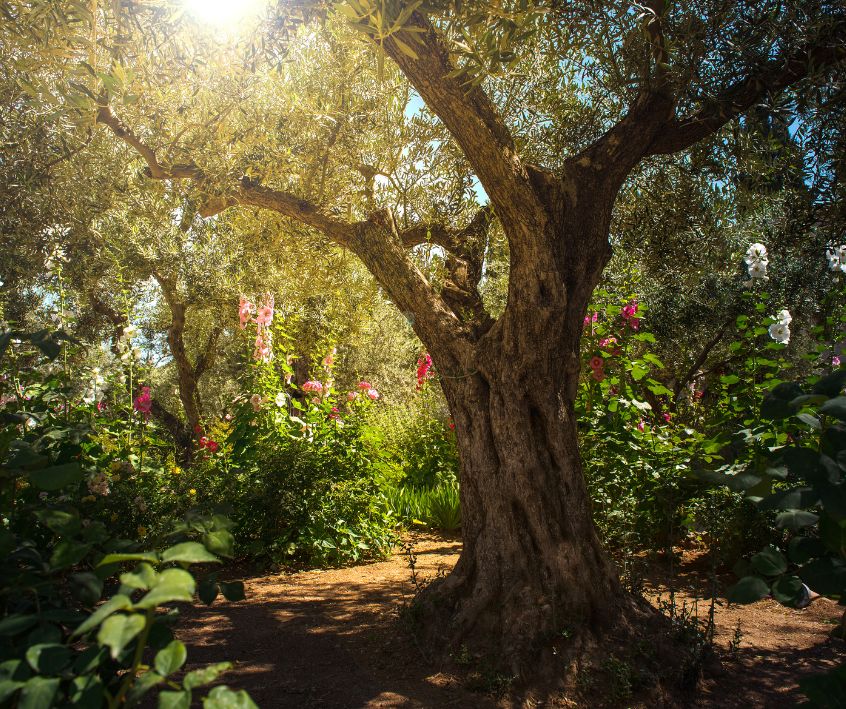
At its core, a forest garden is an agronomic system designed to look and function like a young natural woodland. However, instead of just random wild plants, it is filled with fruit and nut trees, berry bushes, herbs, and perennial vegetables that are useful to humans.
The concept is built on three main principles:
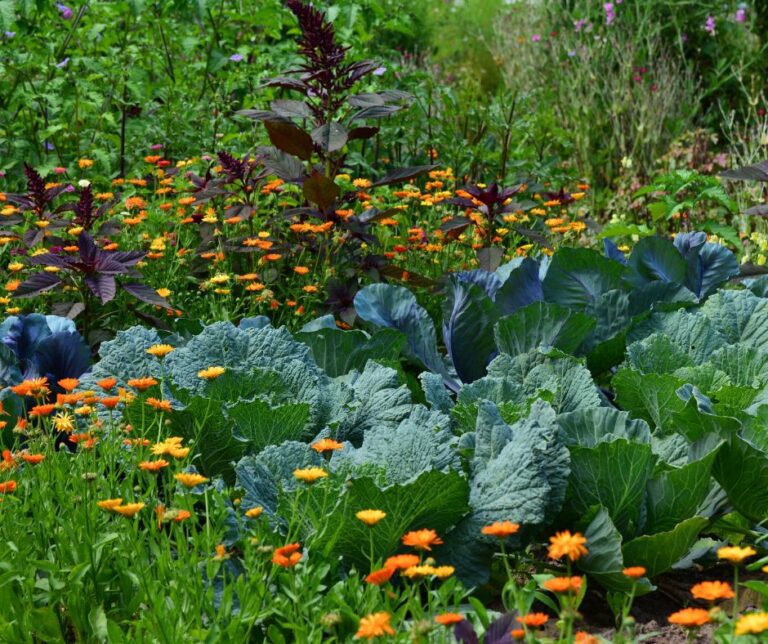
- Polyculture: Growing many different types of plants together rather than a single crop (monoculture).
- Perennials: Focusing on plants that live for many years, reducing the need to replant every spring.
- Layers: Utilizing vertical space by planting tall trees, shorter trees, shrubs, and ground covers in the same area.
By observing how forests work, we learn that they don’t need chemical fertilizers or pesticides. A forest garden aims to replicate this self-regulating cycle.
The Ecological Benefits
When you plant a forest garden, you aren’t just growing food; you are restoring the planet on a micro-scale.
Boosting Biodiversity
One of the most immediate changes you will notice is the return of wildlife. By planting a diverse range of species, you create a habitat for pollinators like bees and butterflies, as well as birds and beneficial insects.
These creatures are vital for a healthy ecosystem, helping to control pests naturally so you don’t have to reach for harsh chemicals.
Regenerating Soil Health
Traditional gardening often disturbs the soil through tilling, which destroys the delicate structure and life underground. In a forest garden, the soil is rarely disturbed.
Leaves and plant debris fall to the ground and decompose, creating a rich layer of humus. This feeds the vast network of microorganisms and fungi that help plants absorb nutrients.
Conserving Water
Forest gardens are thirsty initially, but once established, they are incredibly water-efficient. The dense planting style shades the soil, reducing evaporation.
Meanwhile, deep-rooted trees bring up moisture from deep underground, sharing it with shallower-rooted plants through a process called hydraulic redistribution.
Practical Benefits for Your Family
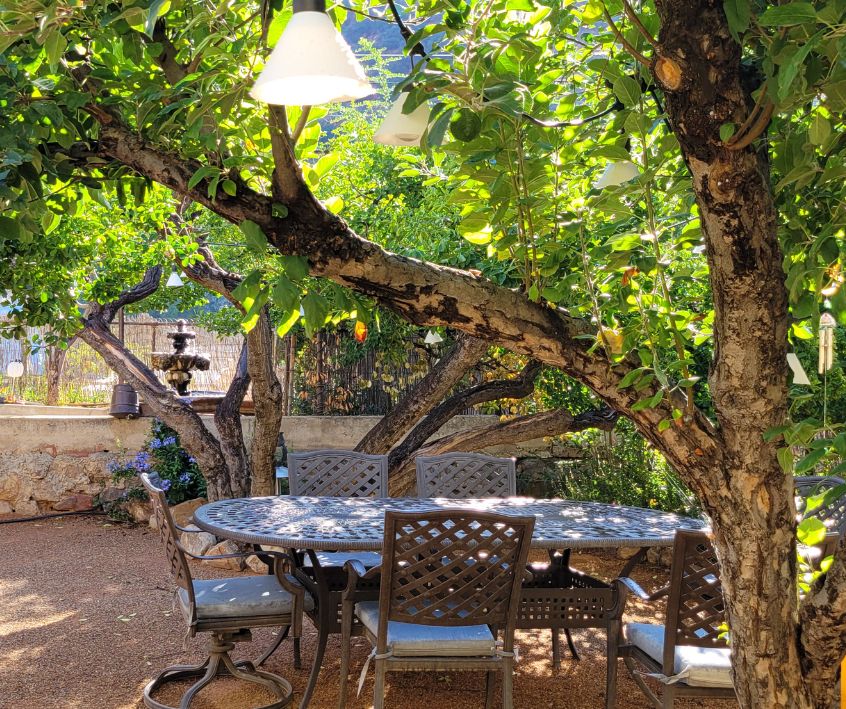
Beyond saving the planet, a forest garden makes life easier and healthier for you.
Food Security and Resilience
Growing your own food provides a safety net. Perennial crops are generally more resilient to extreme weather, like droughts or heavy rains, than fragile annual vegetables.
Once your system is mature, you’ll have a reliable source of organic fruits, nuts, and greens right outside your door.
Reduced Maintenance
While setting up a forest garden requires upfront effort in planning and planting, the long-term maintenance is significantly lower than a conventional vegetable patch.
There is no annual tilling, sowing, or intense weeding. The goal is to set up a system that largely looks after itself, leaving you more time to enjoy the harvest.
Aesthetic Value
Let’s not forget beauty. Forest gardens are visually stunning, offering a wild, romantic aesthetic. They provide shade in the summer, beautiful blossoms in the spring, and a riot of color in the autumn.
It’s a retreat for your family to enjoy year round. Here in the desert, we get large dust storms known as haboobs. Within a year of installing the first stage of forest plants, we noticed less wind damage and dust getting into our home.
How to Start Your Forest Garden
Ready to dig in? You don’t need a degree in botany to get started. Just follow these foundational steps.
1. Site Selection and Analysis
Before you plant a single seed, observe your land. Where does the sunlight fall? Where does water pool after rain? Identifying microclimates (small areas with different conditions) will help you decide where to place specific plants.
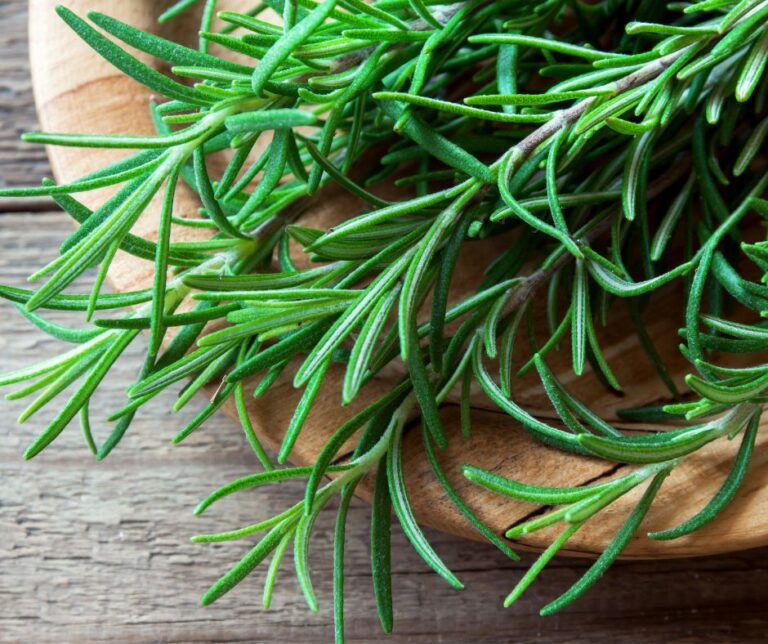
For example, moisture-loving plants like elderberry will thrive in damp spots, while Mediterranean herbs prefer full sun and dry soil.
2. Understanding the Seven Layers
The magic of a forest garden lies in its vertical structure. Aim to fill these seven layers over time:
- Canopy Layer: Large fruit or nut trees (e.g., walnut, chestnut).
- Low Tree Layer: Dwarf fruit trees (e.g., apple, pear, cherry).
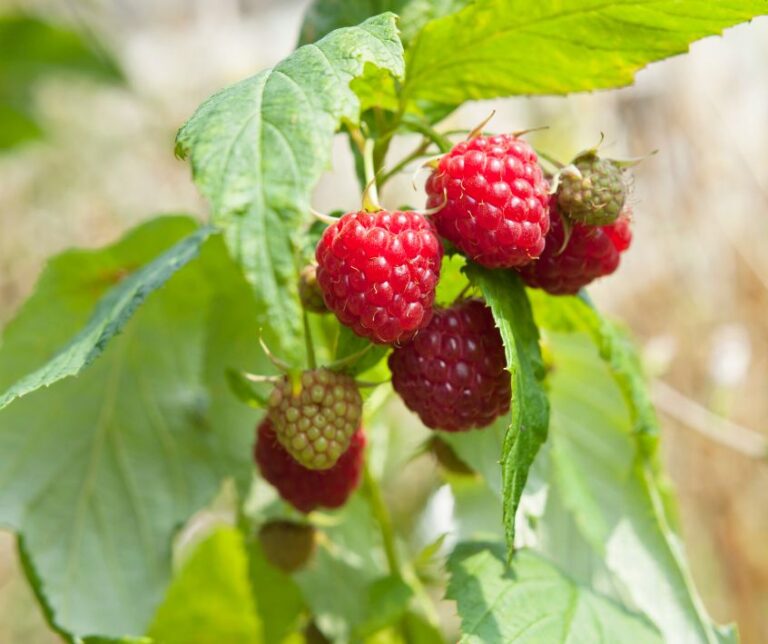
- Shrub Layer: Berry bushes (e.g., currants, raspberries, blueberries).
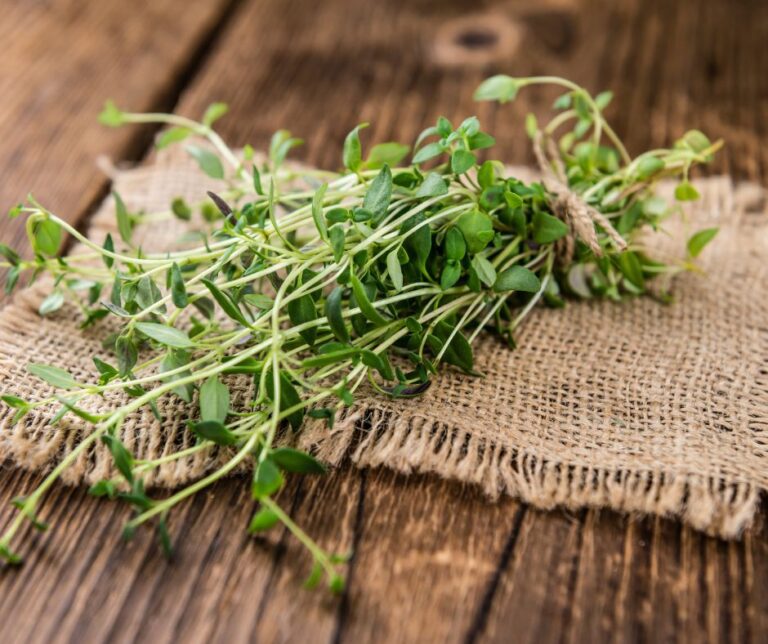
- Herbaceous Layer: Perennial vegetables and herbs (e.g., comfrey, rhubarb).
- Ground Cover Layer: Low-growing plants to suppress weeds (e.g., strawberries, clover).
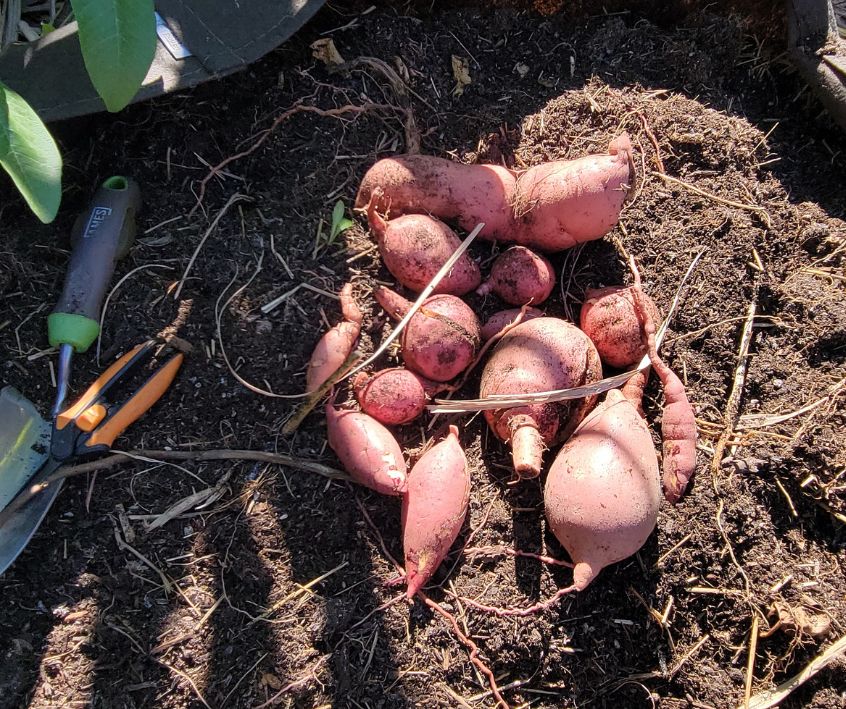
- Underground Layer: Root crops (e.g., Jerusalem artichokes, garlic).
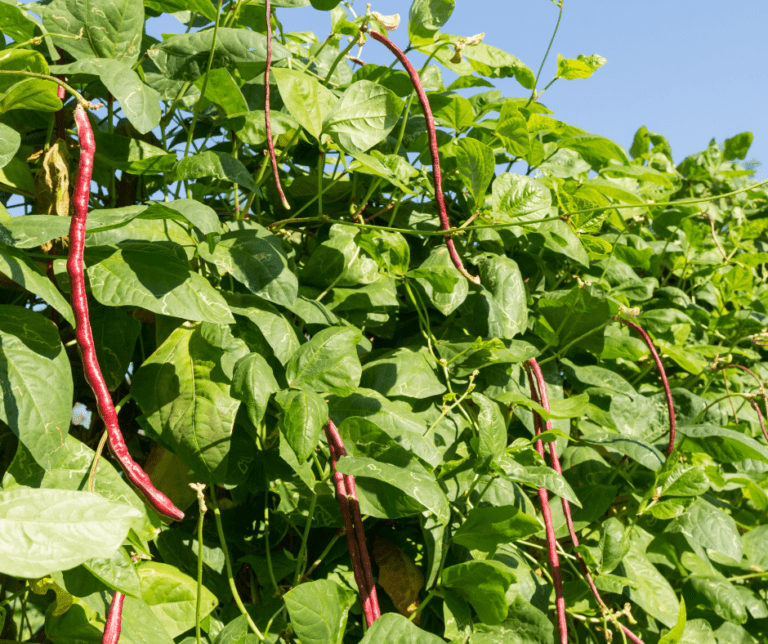
- Vertical Layer: Climbers and vines (e.g., grapes, kiwi, hops).
3. Planning Your Guilds
You don’t need to plant the whole forest at once. Start with one “guild”, a central tree surrounded by supportive plants that help it thrive.
For instance, plant an apple tree (the centerpiece) with chives (to repel pests) and clover (to fix nitrogen in the soil) around the base.
There are a few books I refer to on a regular basis when planning my gardens with companion planting in mind. They are:
Carrots Love Tomatoes: Secrets of Companion Planting for Successful Gardening,
Roses Love Garlic: Companion Planting and Other Secrets of Flowers
Vegetables Love Flowers: Companion Planting for Beauty and Bounty.
Selecting the Right Plants
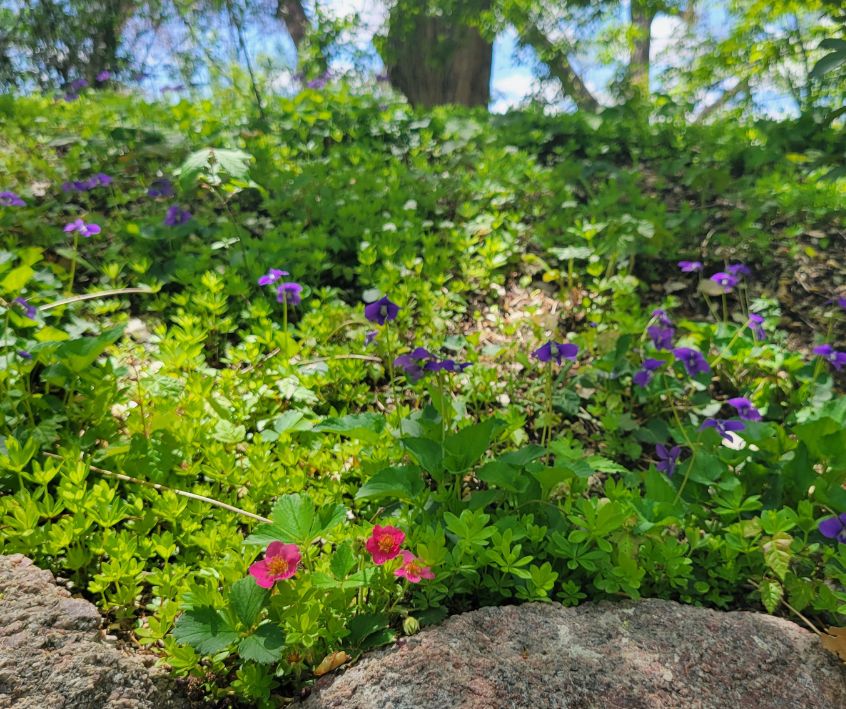
Choosing native species is a smart move for beginners. Native plants are adapted to your local climate and pests, meaning they will grow with less fuss. However, don’t be afraid to mix in non-invasive exotic species that provide food or other benefits.
Look for nitrogen-fixers like diverse legumes or specific trees like Alder. These plants pull nitrogen from the air and store it in their roots, naturally fertilizing the soil for their neighbors.
Also, prioritize dynamic accumulators like comfrey; their deep taproots mine nutrients from the subsoil and make them available to other plants when their leaves decompose on the surface.
Maintenance Tips for Success
Even a “wild” garden needs a steward. Here is how to keep your ecosystem thriving.
Mulch, Mulch, Mulch
Especially in the early years, heavy mulching is crucial. It suppresses weeds and retains moisture.
This is the key to avoiding hours of weeding. Use organic materials like wood chips, straw, or leaves. Eventually, your plants will produce their own mulch.
Chop and Drop
Instead of bagging up garden waste, cut back dead or overgrown plant material and drop it directly onto the soil. This mimics the natural forest cycle, returning nutrients directly to the earth. Grow plants naturally high in nitrogen, like Mexican sunflower, specifically for this purpose.
Pruning
Occasional pruning helps keep the canopy open so light can reach the lower layers. It also keeps your fruit trees healthy and productive.
Inspiration from Successful Gardens
Forest gardening isn’t a new invention; it’s an ancient practice refined by modern pioneers.
Robert Hart’s Garden (Shropshire, UK): Considered the father of temperate forest gardening, Hart transformed a small orchard into a lush, multi-layered food jungle on just an eighth of an acre. His work proved that you don’t need vast lands to be successful.
Martin Crawford’s Agroforestry Research Trust: Also in the UK, this two-acre site demonstrates how a mature forest garden can function commercially, producing a massive variety of foods with minimal inputs.
These examples show that whether you are in a cool temperate zone or a tropical one, the principles remain the same.
Common Mistakes to Avoid
Gardening is a learning process, but you can skip a few headaches by avoiding these common pitfalls.
- Skipping Site Analysis: It is tempting to buy plants immediately, but planting a sun-lover in the shade guarantees failure. Spend a year observing your garden through all four seasons if you can.
- Overcrowding: Plants look small in pots, but trees grow big! Give them space to mature so they aren’t competing for light and nutrients later.
- Neglecting Paths: You need to reach your food to harvest it. Plan paths early on so you don’t compact the soil around your plants’ roots by walking on it.
Resources to Help You Grow
You are not alone in this journey. There is a wealth of information available to help you cultivate your green thumb.
- Books: Creating a Forest Garden by Martin Crawford is often cited as the bible for temperate climates. Gaia’s Garden by Toby Hemenway is another fantastic, beginner-friendly resource.
- Online Communities: Websites like Permies.com offer forums where you can ask questions and share progress.
- Local Experts: Check with your local university extension or botanical garden for workshops on native plants and permaculture design.
Use The American Horticultural Society Map to Find A Garden By Location
Cultivate Your Own Eden
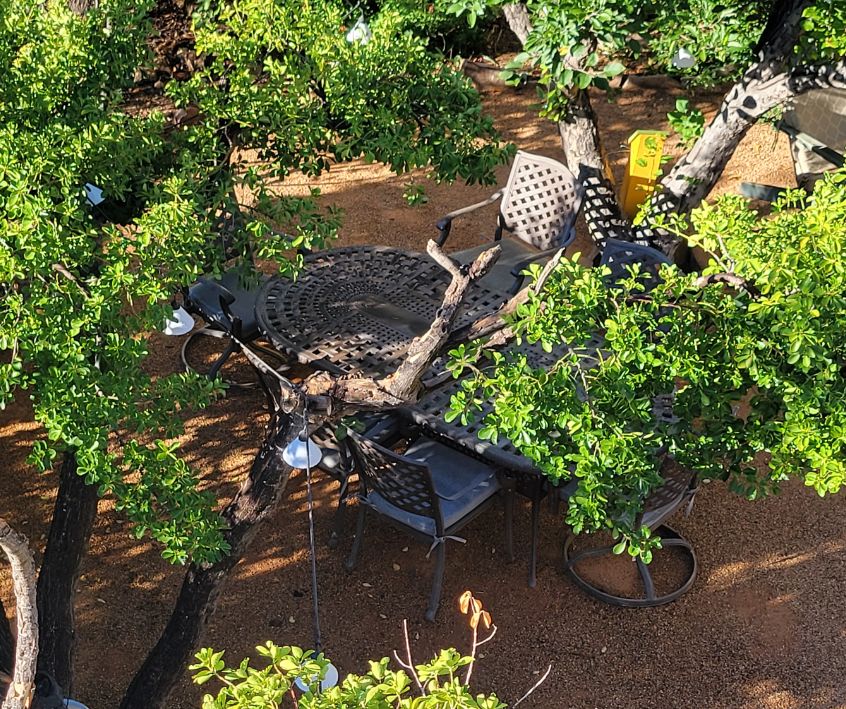
Starting a forest garden is an act of hope and a commitment to a healthier future. It’s about building a relationship with the land that gives back as much as you put in. You don’t have to transform your entire yard overnight. Start with a single fruit tree guild or a corner of your lawn.
Every tree you plant and every patch of soil you heal contributes to a greener planet and a healthier family. So, grab a shovel, get your hands dirty, and watch as nature takes the lead in growing your own personal paradise.
Visit the Garden Resources page for supplies and inspiration. Don’t forget to subscribe to the Calendula’s Garden Newsletter for more gardening tips.
Calendula’s Garden is reader supported. When you buy through links on our site, we may earn an affiliate commission. As an Amazon Associate, I earn from qualifying purchases. For more information, view our Disclaimer page. Thank you!