Simple Solutions for Managing Spider Mites on Indoor and Outdoor Plants
Calendula's Garden is reader suported This post may contain affiliate links, more on our Disclaimer page. Thank you!
Spider mites might be tiny, but these pests can wreak havoc on your beloved plants, both in the garden and indoors. Recognizing and addressing a spider mite infestation quickly is essential to maintaining your greenery’s health and vitality.
This guide will equip you with the knowledge and practical steps to identify, prevent, and manage spider mites effectively.
Understanding Spider Mites
Spider mites are minuscule arachnids related to spiders and ticks. They thrive in warm, dry conditions, making both outdoor gardens during summer and indoor plants during winter susceptible to their infestations.
These pests feed on plant cells by puncturing them and sucking out the contents, resulting in damage that can stifle plant growth and even cause death if left untreated.
Identifying Spider Mites

Recognizing a spider mite infestation early can save your plants. Here are some tell-tale signs to watch for:
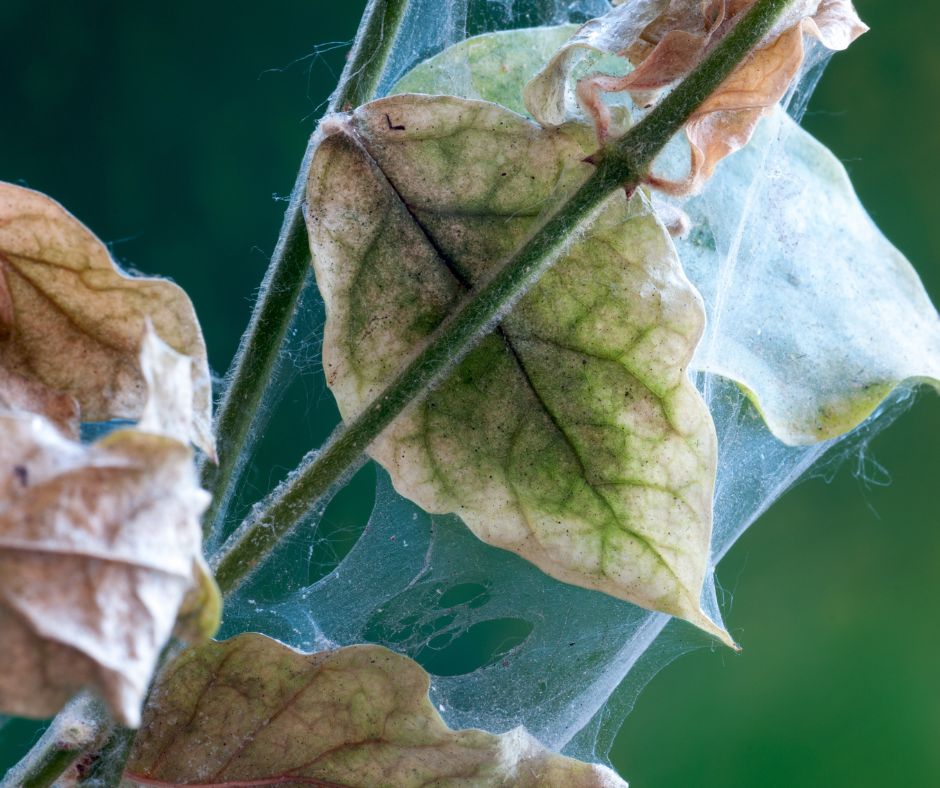
Webbing: Similar to spider webs, a fine mesh of silk can often be found on the undersides of leaves or between plant stems.
Stippling: Tiny yellow or white speckles on leaves indicate where the mites have fed, causing damage to the plant’s cells.
Discoloration: Leaves may turn yellow, bronze, or even fall off as the damage progresses.
To confirm the presence of spider mites, place a sheet of white paper beneath the affected foliage and gently shake the leaves. If you see tiny moving specks on the paper, you likely have spider mites.
Preventive Measures
Prevention is always better than cure. To keep spider mites at bay, consider these preventive strategies:
Regular Inspections: Make it a habit to regularly check your plants for any signs of pests, especially during warm, dry spells.
Proper Watering Practices: Spider mites thrive in dry conditions, so keep your plants well-watered. Be cautious not to overwater, which can lead to other issues.
Healthy Environment: Ensure your plants are in optimal growing conditions, with adequate sunlight, airflow, and nutrients.
7 Best Garden Soil Amendments and Fertilizers
Natural Control Methods
If you discover an infestation, natural remedies can effectively control spider mites without harsh chemicals:
Neem Oil: Neem oil contains azadirachtin, a natural compound that disrupts the life cycle of pests. Mix with water and spray directly onto affected plants.
Insecticidal Soap: This treatment works by suffocating the mites. Be sure to cover all plant surfaces, including the undersides of leaves.
Beneficial Predators: Introduce natural predators like ladybugs or predatory mites into your garden. These creatures will feed on spider mites without harming your plants.
A list of the most effective Natural Pest Control Solutions we have used in the garden.
Mechanical Control
Mechanical methods provide additional support in controlling spider mite populations:
Spraying with Water: Use a strong stream of water to dislodge mites from plant surfaces. This can physically reduce their numbers and offer temporary relief.
Isolating Infested Plants: Prevent the spread of mites by separating infested plants from healthy ones until the problem is resolved.
Chemical Control (as a Last Resort)
In cases where natural and mechanical methods aren’t enough, chemical pesticides can be used as a last resort. Always choose pesticides specifically formulated for spider mites and follow label instructions carefully to minimize harm to beneficial insects and the environment.
Aftercare and Monitoring
Post-treatment care is crucial to ensure the mites don’t return:
Monitoring: Continue to check for signs of reinfestation regularly, especially on plants that were previously infested.
Adjust Preventive Measures: Based on what you’ve learned, refine your prevention strategies to better protect your plants in the future.
Dealing with spider mites can be challenging, but with vigilance and the right approach, you can protect your plants and maintain their lush, vibrant health.
Read more about the life history and habits of spider mites from the Colorado State University Extension Service.
Stay proactive in your plant care routines, and remember that early detection and consistent monitoring are your best tools in preventing future infestations. Keep your garden and houseplants thriving, and enjoy the beauty and satisfaction they bring to your space.
Visit the Garden Resources page for supplies and inspiration. Don’t forget to subscribe to the Calendula’s Garden Newsletter for more gardening tips.
Calendula’s Garden is reader supported. When you buy through links on our site, we may earn an affiliate commission. As an Amazon Associate, I earn from qualifying purchases. For more information, view our Disclaimer page. Thank you!