Practical Tips for Thriving Indoor Citrus Trees
Calendula's Garden is reader suported This post may contain affiliate links, more on our Disclaimer page. Thank you!
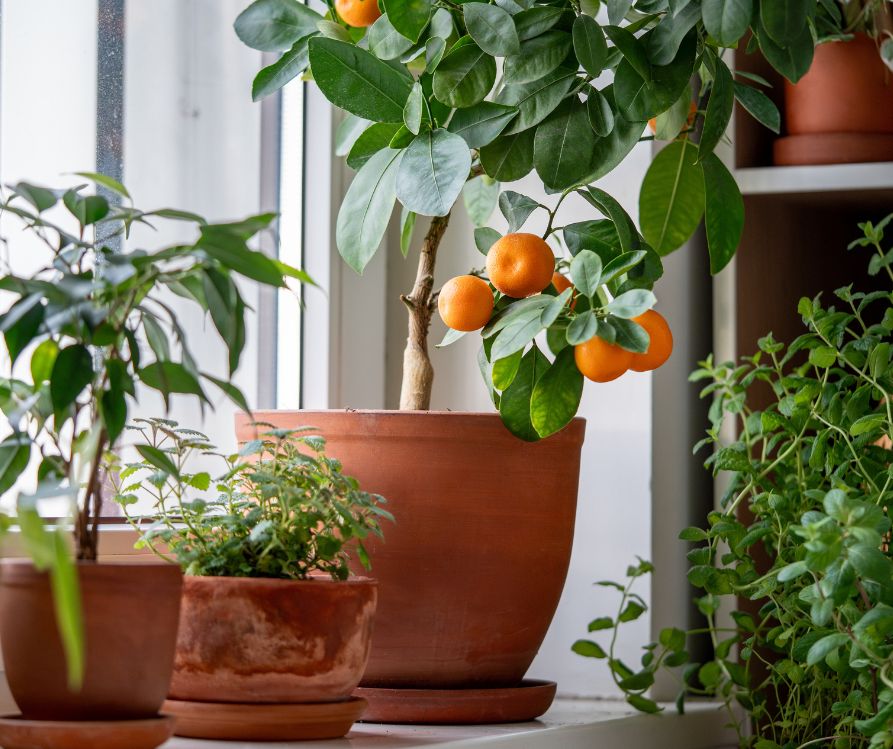
Imagine stepping into your kitchen on a cold winter morning and plucking a fresh, fragrant lemon from your very own tree. Growing citrus trees indoors brings a slice of the Mediterranean right into your home, filling your space with glossy green leaves, delicate white blooms, and eventually, juicy fruits bursting with flavor.
Indoor citrus gardening has gained popularity among home gardeners who want to enjoy fresh citrus year-round, regardless of their climate. Beyond the obvious benefit of homegrown fruit, these evergreen beauties purify your indoor air, add natural fragrance to your space, act as privacy screens, and create a stunning focal point in any room.
The best part? You don’t need a greenhouse or years of gardening experience to succeed. With the right variety, proper care, and a little patience, you’ll be harvesting your own citrus fruits within a few years. Let’s explore how to transform your home into a citrus paradise.
Choosing the Right Citrus Variety
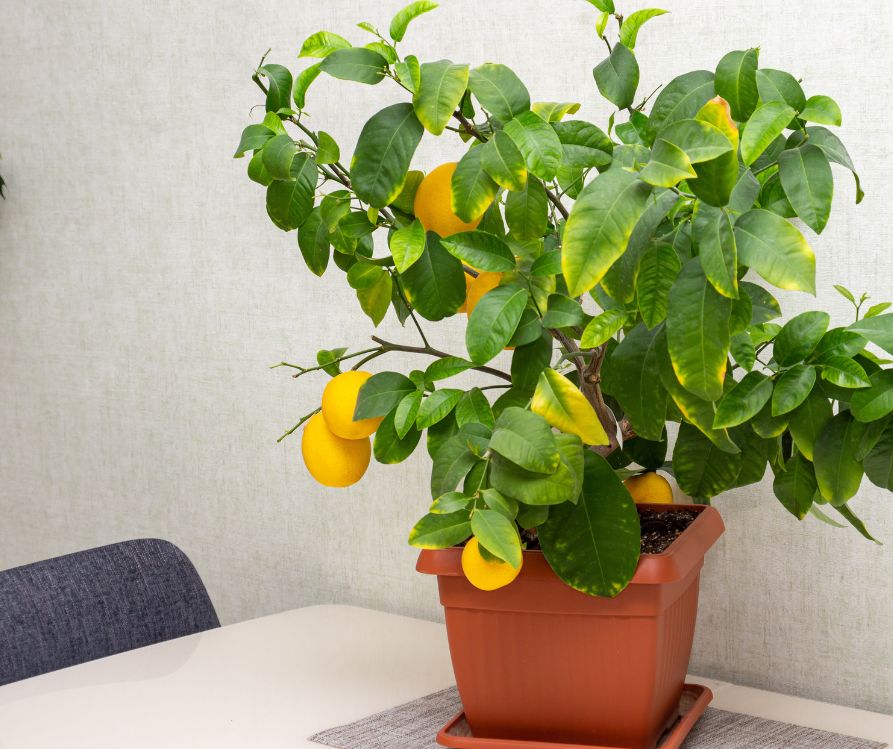
Not all citrus trees thrive indoors, so selecting the right variety is crucial for success. Dwarf and semi-dwarf cultivars are your best friends. They stay compact while still producing full-sized fruit.
Meyer Lemon tops the list for beginners. This hardy variety produces sweet, thin-skinned lemons and adapts beautifully to container life. Meyer lemons bloom almost continuously, meaning you’ll enjoy fragrant flowers alongside developing fruit.
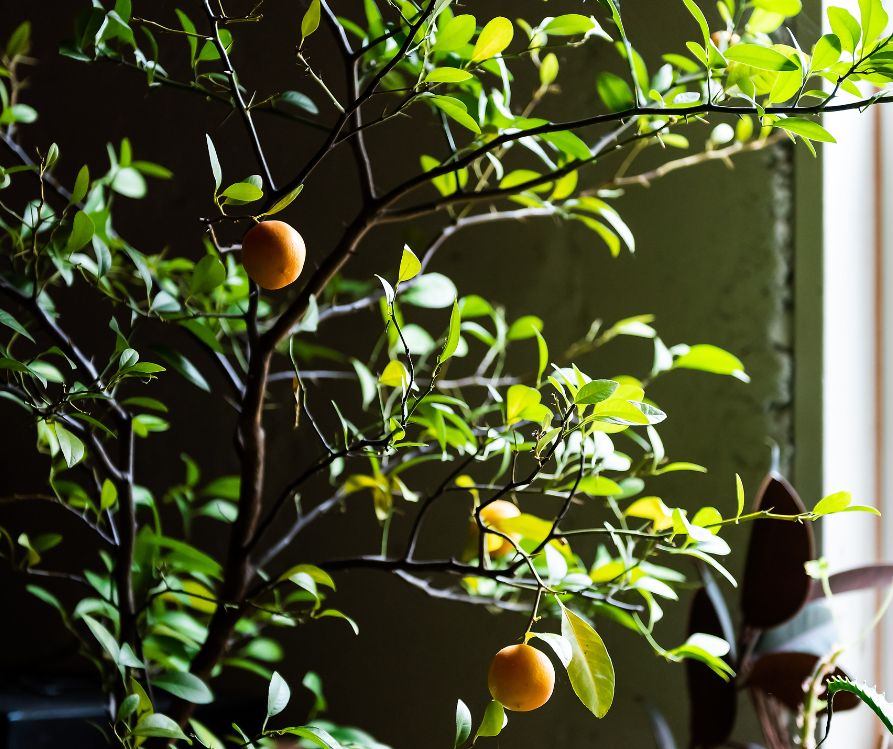
Calamondin Orange offers the perfect combination of ornamental beauty and culinary utility. These small, tart oranges work wonderfully in cooking and cocktails, while the tree itself stays naturally compact and flowers prolifically.
Key Lime brings tropical flair to your indoor garden. These authentic limes pack intense flavor, and the tree remains manageable in size. Plus, imagine having fresh key limes for homemade pie whenever the craving strikes.
Kumquat varieties deserve special mention for their unique eat-the-peel appeal and exceptional cold tolerance. These small, oval fruits offer a burst of sweet-tart flavor, edible peel, great for preserves, and the trees stay naturally petite.
When shopping, look for grafted trees rather than seed-grown ones. Grafted trees fruit faster and maintain the characteristics of their parent plant, ensuring you get the variety you expect.
Where to find seeds, plants, and supplies:
Essential Growing Conditions

Success with indoor citrus trees hinges on replicating their native Mediterranean climate as closely as possible within your home.
Light Requirements
Citrus trees are sun worshippers, requiring 6-8 hours of direct sunlight daily. A south-facing window typically provides the best exposure, though east or west windows can work if they receive adequate morning or afternoon sun.
During shorter winter days, consider supplementing natural light with grow lights. LED grow lights positioned 6-12 inches above your tree can make the difference between a thriving plant and one that merely survives.
Popular Lights for Large Indoor Plants
LED Full Spectrum Grow Light for Large Indoor Plants, Height Adjustable, Automatic Timer
Barrina LED T5 Full Spectrum Grow Light 1ft Mountable Strips for Indoor Plants
Watering Wisdom
The golden rule for citrus watering: thorough but infrequent. These trees prefer their soil to dry out slightly between waterings, as constantly wet roots quickly lead to root rot.
Stick your finger about 2 inches into the soil. If it feels dry, it’s time to water deeply until water drains from the bottom holes. During summer, you might water every few days, while winter watering may only be needed weekly.
Soil Selection
Invest in a high-quality, well-draining potting mix specifically formulated for citrus or acid-loving plants. These mixes typically maintain a slightly acidic pH between 6.0 and 6.5, which citrus trees prefer.
Avoid garden soil or heavy potting mixes that retain too much moisture. Your citrus tree’s roots need both water and oxygen to thrive.
Temperature and Climate
Most citrus varieties prefer temperatures between 65-75°F during the day and 55-65°F at night. They can tolerate brief temperature dips to around 50°F but should be protected from drafts and sudden temperature changes.
Keep your tree away from heating vents, air conditioning units, and frequently opened exterior doors where temperature fluctuations are common.
Humidity Considerations
Indoor air, especially during the winter heating season, often lacks the humidity citrus trees crave. Aim for humidity levels around 50-60%.
LEVOIT Top Fill Humidifiers Quiet Cool Mist Air Humidifier for Plants, Auto Shut-off and BPA-Free
Increase humidity by placing a water-filled tray with pebbles beneath your pot, grouping plants together, or using a humidifier. Misting the leaves can help, but avoid getting water on the flowers or fruit.
Potting and Repotting
Choosing the right container sets the foundation for your citrus tree’s health and growth.
Start with a pot that’s only 2-4 inches larger in diameter than your tree’s root ball. Oversized pots hold too much moisture and can lead to root problems. Terracotta pots offer excellent drainage and breathability, while plastic pots retain moisture longer.
Drainage holes are non-negotiable. If you fall in love with a decorative pot without holes, use it as a cachepot with a properly draining inner container.
Potting steps:
- Place a layer of small stones or pottery shards over the drainage holes
- Add enough potting mix to position your tree at the same depth it was previously growing
- Gently remove the tree from its nursery pot and examine the roots
- Loosen any circling roots and place the tree in the new container
- Fill around the roots with fresh potting mix, leaving about an inch of space at the top
- Water thoroughly and allow excess water to drain
Plan to repot every 2-3 years or when roots become crowded. Spring, just before the growing season begins, offers the best timing for repotting.
Fertilizing Your Indoor Citrus Tree
Citrus trees are heavy feeders, especially when confined to containers. Regular fertilization ensures healthy growth and good fruit production.
Use a fertilizer specifically formulated for citrus plants, as these contain the right balance of nitrogen, phosphorus, and potassium, plus essential micronutrients like iron, magnesium, and zinc.
During the growing season (spring through early fall), fertilize every 4-6 weeks according to package directions. Reduce fertilizing to every 8-10 weeks during winter when growth slows.
Watch for yellowing leaves, which often indicate nutrient deficiency, particularly nitrogen or iron. Adjust your fertilizing schedule accordingly.
Pruning and Training
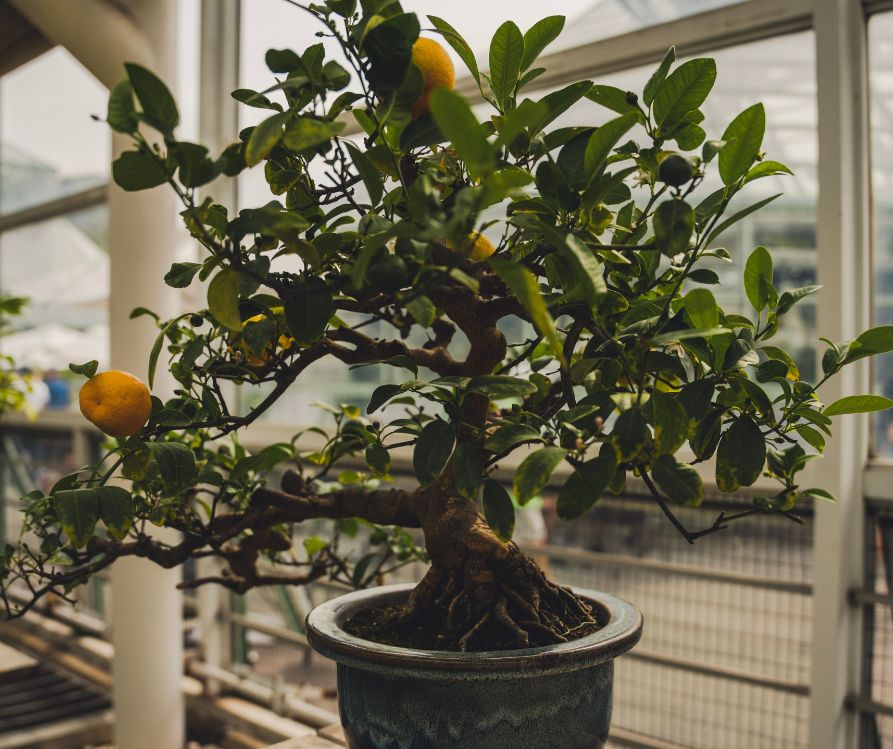
Regular pruning keeps your indoor citrus tree healthy, attractive, and productive. Late winter or early spring, before new growth begins, offers the ideal pruning time.
Focus on removing dead, diseased, or crossing branches first. Then shape your tree by pruning back overly long branches and removing any growth below the graft union (if visible).
Citrus trees naturally want to grow long, spindly branches, but you can train them into a more bushy shape for indoor growing by pruning the top and encouraging lateral branches.
Don’t be afraid to prune. Citrus trees respond well to moderate pruning and often reward you with increased flowering and fruiting.
Pest and Disease Management
Indoor citrus trees face fewer pest problems than their outdoor counterparts, but vigilance remains important.
Common pests include:
- Aphids: Small, soft-bodied insects that cluster on new growth
- Spider mites: Tiny pests that cause stippled leaves and fine webbing
- Scale insects: Small, brown or white bumps on stems and leaves
- Mealybugs: White, cottony insects in leaf joints and stem crevices
Combat pests with insecticidal soap, neem oil, or by wiping leaves with a damp cloth. Quarantine any new plants before introducing them to your collection.
Prevention works best: maintain good air circulation, avoid overwatering, and inspect your tree regularly for early pest detection.
Encouraging Fruit Production
Patience pays off when growing citrus indoors. Most trees begin producing fruit 2-4 years after planting, depending on their age and variety.
Indoor citrus trees may need help with pollination since natural pollinators aren’t present. When flowers appear, transfer pollen between blooms using a small paintbrush or cotton swab, moving from flower to flower in a gentle dabbing motion.
Adequate light, proper nutrition, and consistent watering all contribute to fruit set. Don’t be discouraged if your tree drops some young fruit—this is natural as the tree adjusts its fruit load to match its energy reserves.
Strategic Placement of Indoor Citrus Trees for Privacy and Light
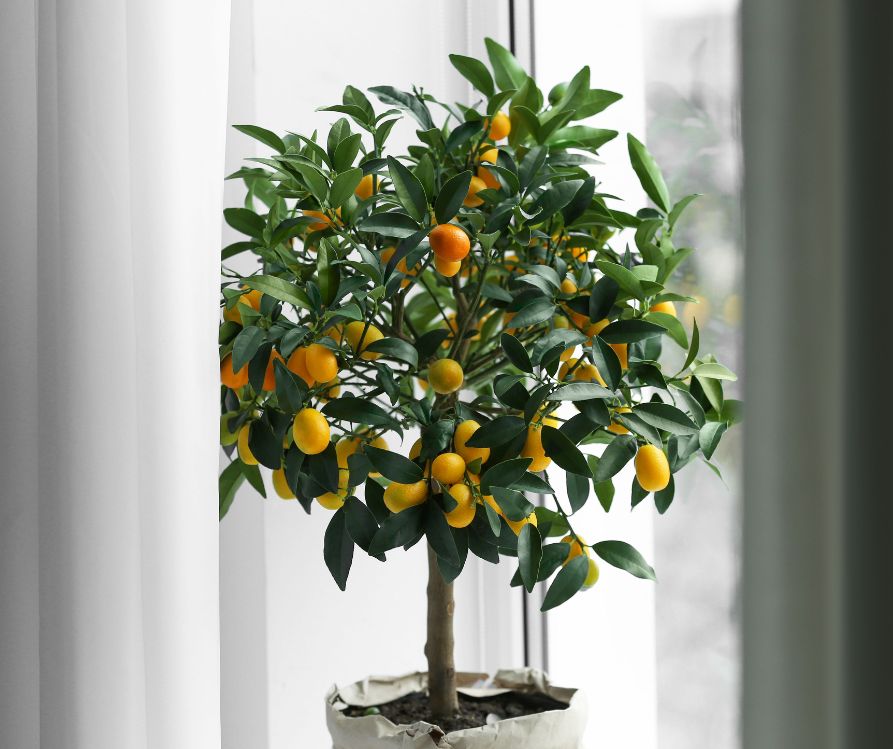
Placing indoor citrus trees thoughtfully around your home can enhance privacy while maintaining an open, airy feel and allowing ample natural light.
Start by identifying windows or spaces where you’d like to maximize privacy without resorting to heavy curtains or blinds. Position your trees near these areas, ensuring the foliage creates a natural screen from prying eyes while still complementing the space.
For optimal light, citrus trees should be placed near south or west facing windows, where they can receive the bright, indirect sunlight essential for their growth.
If privacy is a priority for street-facing windows, select trees with denser foliage, such as calamondin or Meyer lemon, to create a lush barrier that allows you to keep your windows open without compromising your personal space.
Additionally, you can use taller pots or plant stands to raise the height of your trees, effectively increasing their coverage and adaptability to your interior design.
By combining privacy and functionality, indoor citrus trees can transform your living space into a serene and vibrant environment while reaping the practical benefits of fresh air, light, and a touch of nature indoors.
Overwintering Citrus Trees
Winter care differs significantly from summer maintenance. As daylight hours decrease and temperatures drop, your citrus tree enters a semi-dormant period.
Reduce watering frequency, but don’t let the soil become completely dry. Stop fertilizing or switch to a reduced winter schedule. If possible, move your tree to a cooler location (50-60°F) with bright light. This mimics natural winter conditions and can improve flowering the following spring.
Don’t worry if your tree drops some leaves during winter. This is normal as the plant conserves energy during shorter days.
Growing Success Awaits You
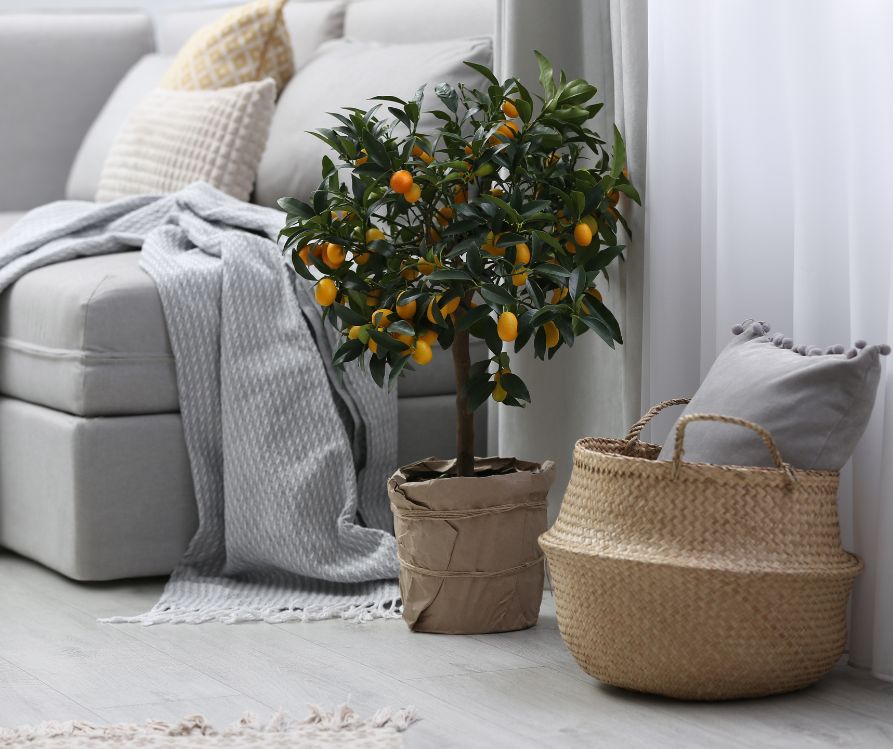
Growing citrus trees indoors combines the satisfaction of nurturing a living plant with the reward of homegrown fruit. While it requires attention to detail and patience, the joy of harvesting your first homegrown lemon or lime makes every effort worthwhile.
Start with one easy variety like Meyer lemon, master the basics, and then expand your indoor orchard. Soon, you’ll be sharing fresh citrus with friends and family, along with the knowledge you’ve gained about successful indoor fruit growing.
Your journey to fresh, homegrown citrus begins with selecting that first tree. Why not start today? Your future self will thank you when you’re enjoying a fresh-squeezed glass of juice from fruit grown in your own home.
Visit the Garden Resources page for supplies and inspiration. Don’t forget to subscribe to the Calendula’s Garden Newsletter for more gardening tips.
Calendula’s Garden is reader supported. When you buy through links on our site, we may earn an affiliate commission. As an Amazon Associate, I earn from qualifying purchases. For more information, view our Disclaimer page. Thank you!