How to Use Ornamental Grasses for a Natural Privacy Screen
Calendula's Garden is reader suported This post may contain affiliate links, more on our Disclaimer page. Thank you!
I’ll be honest with you. The first time I planted a row of ornamental grasses along my back fence, I wasn’t sure it would actually work.
Would they grow tall enough? Would they look scraggly in winter? Would the neighbors laugh?
They didn’t laugh. They asked me where I got the idea.
Quick answer: Ornamental grasses like Feather Reed Grass, Maiden Grass, Switchgrass, and Pampas Grass make excellent natural privacy screens. They grow quickly, require minimal maintenance, support local wildlife, and cost far less than fencing. Making them one of the most practical and beautiful ways to create backyard seclusion.
A natural grass screen does something a wooden fence simply can’t. It moves with the breeze, changes with the seasons, and makes your yard feel like a retreat rather than a storage unit.
If you’ve been eyeing your neighbor’s deck or wishing for a little more seclusion without the cost and permanence of a fence, keep reading.
I’ll walk you through the best grasses for privacy, how to plant them, and how to keep them looking their best year after year.
Why Ornamental Grasses Beat a Fence for Privacy
More Than Just a Screen: Aesthetics and Ambiance
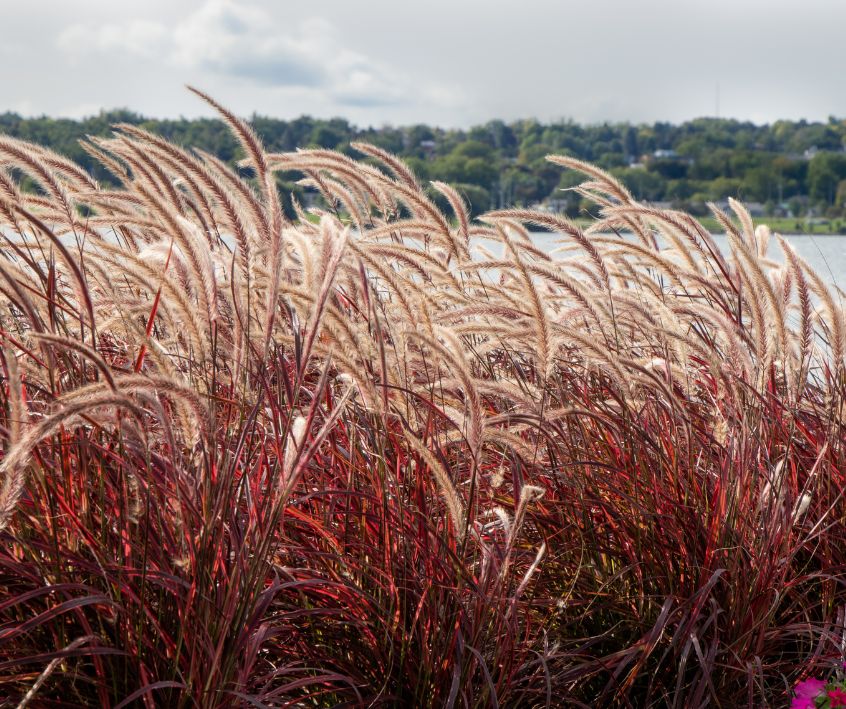
There’s something uniquely satisfying about a living screen. Unlike a fence, ornamental grasses shift and rustle in the wind, creating a soft, natural sound barrier along with a visual one.
They add texture, movement, and seasonal interest to your yard, golden in autumn, silvery in winter, and lush and green through spring and summer.
A well-placed row of tall grasses also softens hard landscaping. Instead of a wall of wood or vinyl, you get something that genuinely looks like it belongs there.
Eco-Friendly and Wildlife-Friendly
Ornamental grasses are a genuine gift to local ecosystems. Their dense clumps shelter small birds and beneficial insects, while their seed heads provide food through the colder months.
Many varieties, particularly native ones like Switchgrass, support pollinators and improve soil health through deep root systems that reduce erosion and runoff.
If you’re trying to garden with the environment in mind, a grass screen is a smart choice.
Cost-Effective and Low-Maintenance
Compared to fencing, ornamental grasses are remarkably affordable. A single plant costs anywhere from $10 to $40, and many varieties spread or can be divided over time, meaning your initial investment goes further each year.
Once established, most ornamental grasses are drought-tolerant and need very little intervention—no painting, no repairs, no rotting panels to replace.
The Best Ornamental Grasses for a Privacy Screen
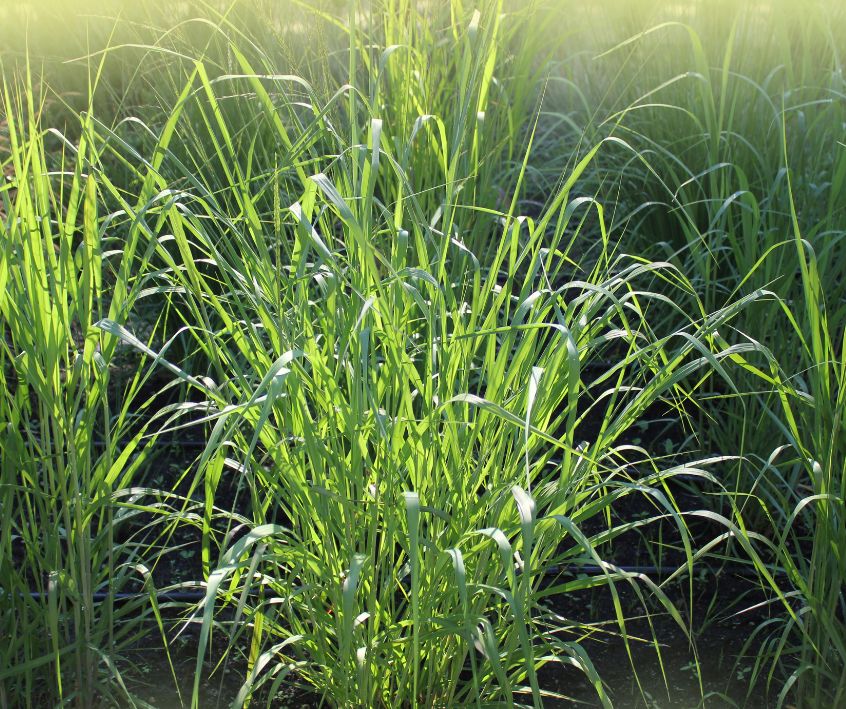
Here are four of my top picks for creating a dense, beautiful natural screen:
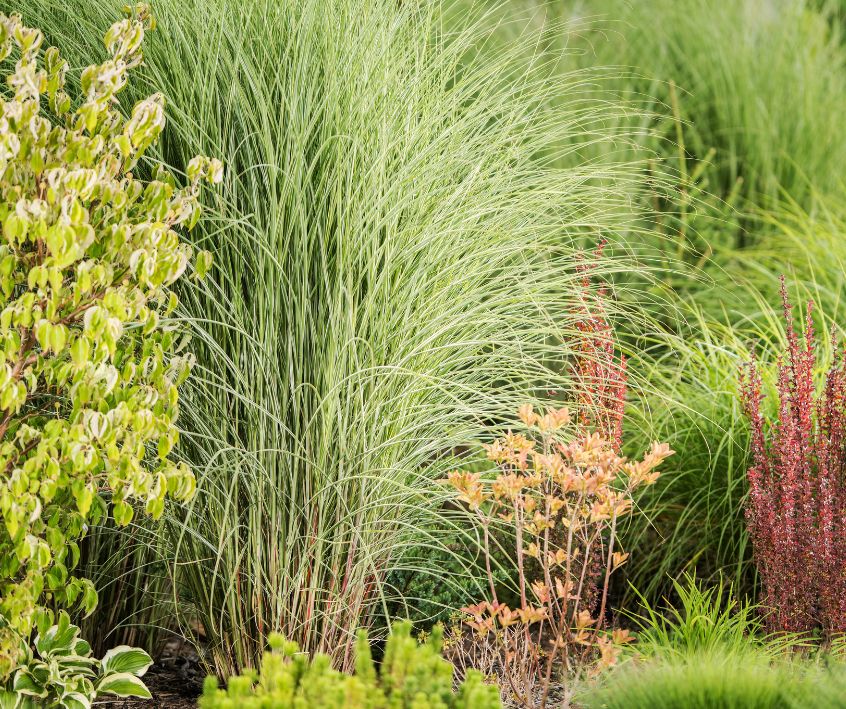
Feather Reed Grass (Calamagrostis acutiflora ‘Karl Foerster’)
- Height: 4–6 feet
- Sun: Full sun to part shade
- Soil: Adaptable; tolerates clay and wet soils
- Water: Moderate; drought-tolerant once established
- Care tips: Cut back to about 4 inches in late winter before new growth emerges. Divide every 3–4 years to maintain vigor.
- Best placement: Ideal for narrow spaces. Its upright, columnar habit makes it perfect for planting in tight rows along property lines or pathways. Space plants about 2–3 feet apart for a dense screen within a season or two.
Maiden Grass (Miscanthus sinensis ‘Gracillimus’)
- Height: 5–7 feet
- Sun: Full sun
- Soil: Well-drained; tolerates a range of soil types
- Water: Moderate; fairly drought-tolerant once established
- Care tips: Cut back to 4–6 inches in late winter. Divide every 3–5 years to prevent the center from dying out.
- Best placement: A showstopper in open spaces where it has room to arch gracefully. Plant 4–5 feet apart and use it as a backdrop for shorter plantings or as a standalone screen along a wide border.
Switchgrass (Panicum virgatum)
- Height: 3–6 feet (varies by cultivar)
- Sun: Full sun to light shade
- Soil: Extremely adaptable; thrives in poor, sandy, or wet soils
- Water: Low to moderate; excellent drought tolerance
- Care tips: Cut back in late winter. A native North American grass, Switchgrass rarely needs fertilizing and resists most pests and diseases.
- Best placement: Ideal for naturalistic gardens or yards with challenging soil conditions. Space plants 2–3 feet apart. Cultivars like ‘Shenandoah’ add brilliant red fall color to your screen.
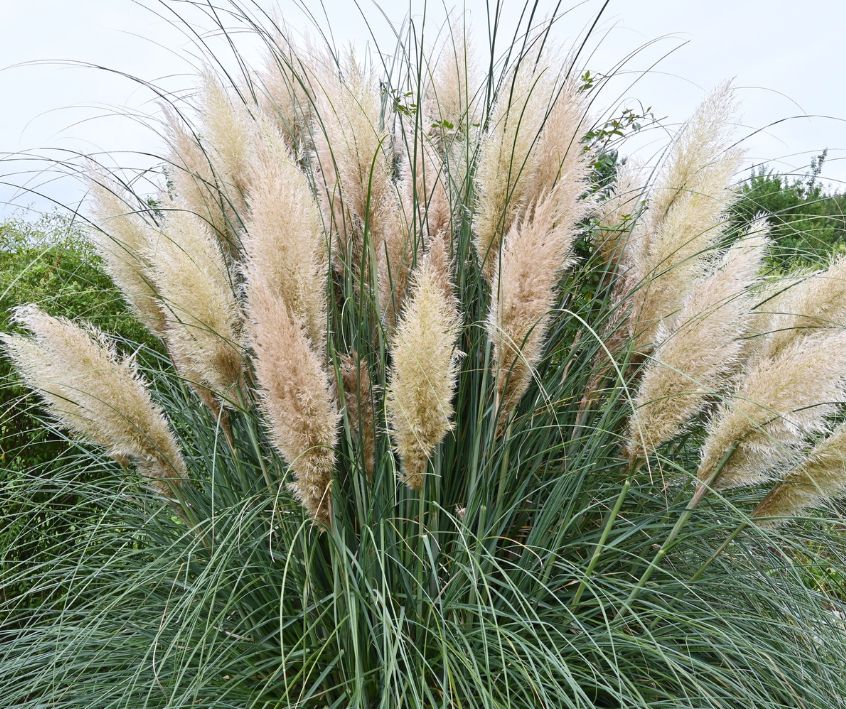
Pampas Grass (Cortaderia selloana)
- Height: 8–12 feet
- Sun: Full sun
- Soil: Well-drained; tolerates poor soils
- Water: Low once established; highly drought-tolerant
- Care tips: Use heavy gloves when pruning. The leaf edges are sharp. Cut back hard in late winter. Note: Pampas Grass is considered invasive in some US states, including California. Check your local regulations before planting.
- Best placement: Best for large properties with plenty of space. Its dramatic plumes make it a bold focal point. Plant 6–8 feet apart and give it room to spread. Not recommended for small or urban gardens.
Getting Your Grasses in the Ground
Choosing the Right Spot
Walk your yard at different times of day and note how much sun each area gets.
Most ornamental grasses prefer at least 6 hours of direct sunlight, though some, like Feather Reed Grass, will tolerate more shade than others.
Also consider drainage: grasses don’t love sitting in waterlogged soil for extended periods.
Preparing the Soil
Loosen the soil to about 12 inches deep and mix in compost if your ground is particularly compacted or poor.
That said, most ornamental grasses are forgiving. They’ve evolved to handle tough conditions, so don’t stress if your soil isn’t perfect.
Planting Technique
Dig a hole roughly twice the width of the root ball and the same depth. Set the plant in so the crown sits level with the surrounding soil; too deep and the crown can rot.
Backfill, firm the soil gently, and water thoroughly. Spring planting gives grasses a full growing season to establish before winter.
Keeping Your Screen Looking Great
Watering
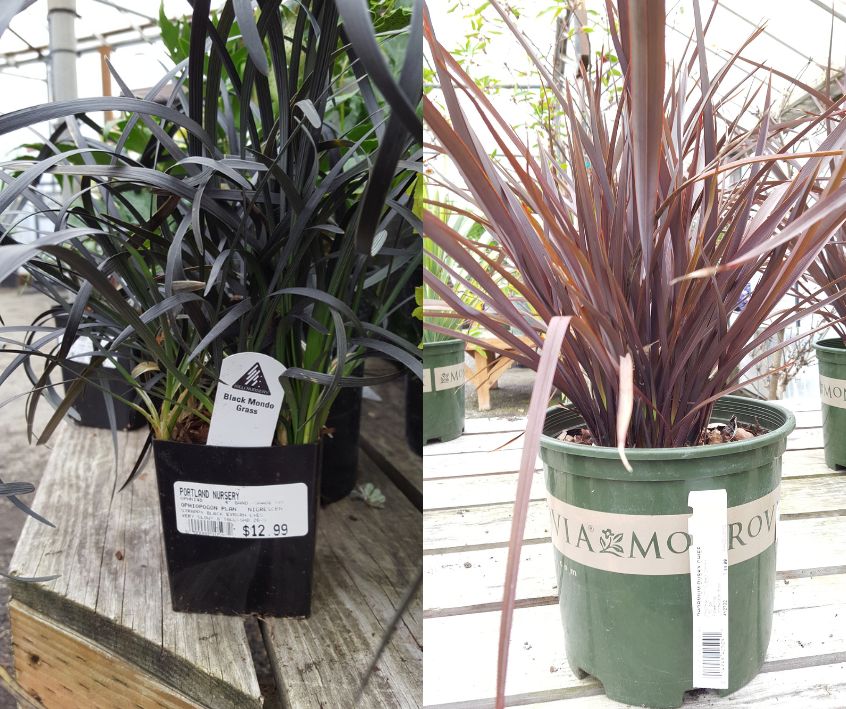
Water deeply and less frequently rather than a little every day. Once established, most ornamental grasses need about an inch of water per week, either from rainfall or irrigation. During the first season, water more regularly to help roots settle in.
Fertilizing
Less is more here. A light application of balanced, slow-release fertilizer in early spring is usually all these grasses need.
Over-fertilizing can actually cause lush, floppy growth that undermines the upright structure you want for a privacy screen.
Pruning and Division
The single most important maintenance task is the annual late-winter cutback. Remove old growth before new shoots emerge in spring.
This keeps plants tidy and encourages vigorous new growth. Most clumping grasses also benefit from division every 3–5 years.
If the center of a clump starts to die out or growth becomes sparse, it’s time to dig up, divide, and replant the healthy outer sections.
Troubleshooting Common Issues
Pests and diseases: Ornamental grasses are generally robust, but keep an eye out for rust (an orange fungal disease) and aphids, particularly in humid climates.
Good air circulation, achieved through proper spacing, goes a long way in preventing fungal issues.
Sparse or patchy growth: If your screen has gaps, the most likely culprits are insufficient sunlight, overcrowding, or overdue division.
Try dividing neighboring plants and filling in bare spots with new divisions or young transplants.
Your Natural Oasis Is Closer Than You Think
Creating a privacy screen with ornamental grasses is one of those gardening projects that rewards you quickly and keeps on giving.
You get seclusion without the cold permanence of a fence, a habitat for birds and insects, and a landscape feature that genuinely improves with age.
Start with one of the four grasses I’ve outlined above. Choose based on your space, your soil, and how much height you need.
Plant in spring, water consistently through the first season, and by the following year, you’ll wonder why you ever considered putting up a fence.
Got questions about which grass is right for your yard? Drop them in the comments below. I’d love to help you find your perfect privacy partner.
Frequently Asked Questions
How tall do ornamental grasses grow for a privacy screen?
Height depends on the variety. Feather Reed Grass reaches 4–6 feet, Maiden Grass 5–7 feet, Switchgrass 3–6 feet, and Pampas Grass up to 12 feet.
For most residential yards, Feather Reed Grass or Maiden Grass provides adequate screening without overwhelming the space.
How quickly do ornamental grasses grow for privacy?
Most ornamental grasses establish quickly. Feather Reed Grass and Switchgrass can reach near-full height within one growing season. Maiden Grass and Pampas Grass may take 2–3 seasons to fill out completely.
How far apart should I plant ornamental grasses for a privacy screen?
Spacing depends on the variety. Feather Reed Grass and Switchgrass can be planted 2–3 feet apart for a dense screen.
Maiden Grass needs 4–5 feet of spacing, and Pampas Grass requires 6–8 feet due to its large spread.
Are ornamental grasses invasive?
Some varieties can be invasive. Pampas Grass (Cortaderia selloana) is listed as invasive in California and several other states.
Miscanthus sinensis is also considered invasive in parts of the eastern US. Always check with your local cooperative extension office before planting.
Do ornamental grasses provide year-round privacy?
Most ornamental grasses are at their fullest from late spring through autumn. In winter, the dried foliage and seed heads remain and offer partial screening, but coverage is reduced. For year-round privacy, consider pairing grasses with evergreen shrubs.
What is the easiest ornamental grass to maintain for a privacy screen?
Switchgrass (Panicum virgatum) is arguably the easiest option. As a native North American grass, it’s highly adaptable, drought-tolerant, resistant to pests and diseases, and rarely needs fertilizing. It’s a great choice for low-maintenance gardens or beginners.
Visit the Garden Resources page for supplies and inspiration. Don’t forget to subscribe to the Calendula’s Garden Newsletter for more gardening tips.
Calendula’s Garden is reader supported. When you buy through links on our site, we may earn an affiliate commission. As an Amazon Associate, I earn from qualifying purchases. For more information, view our Disclaimer page. Thank you!