Forest Garden Ideas for Every Climate Find What Works Best in Your Area
Calendula's Garden is reader suported This post may contain affiliate links, more on our Disclaimer page. Thank you!
Have you ever walked through a forest and noticed how everything just works? No one is out there weeding, watering, or spraying pesticides, yet the ecosystem thrives.
The trees provide shade, the undergrowth offers shelter for wildlife, and the soil is rich and fertile.
Now, imagine bringing that self-sustaining magic into your own backyard, but with a twist: everything you plant is edible or useful.
This is the essence of a food forest, or forest garden. It’s a method of growing food that mimics the architecture and beneficial relationships of a natural woodland.
And here’s the best news: you don’t need acres of land or a degree in horticulture to start one. Whether you’re working with a small urban lot or a sprawling rural property, creating a forest garden is one of the most rewarding ways to “grow your health” and build resilience for your family.
However, a forest that thrives in the misty Pacific Northwest won’t survive in the arid Southwest. Success depends entirely on working with your local climate, not against it.
In this guide, we’ll explore how to adapt the principles of forest gardening to your specific environment, ensuring you can cultivate a pollinator paradise no matter where you live.
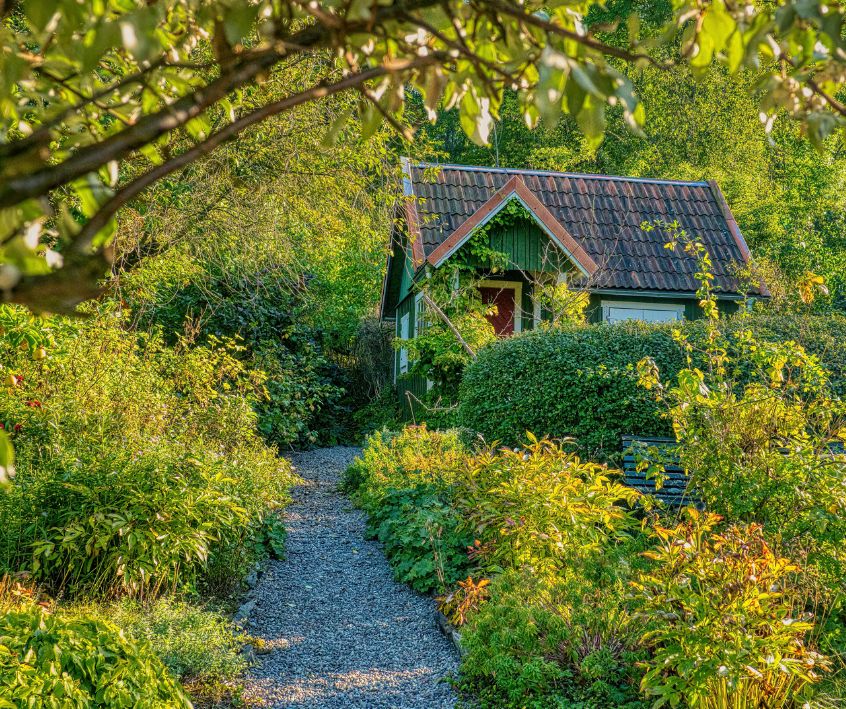
Introduction to Forest Gardening: Benefits and Principles
At its core, a forest garden is an ecosystem designed by humans but powered by nature.
Unlike a traditional vegetable patch, where annual crops (like tomatoes or lettuce) are planted in tidy rows and require constant attention, a forest garden relies heavily on perennial plants, those that come back year after year.
Why Start a Forest Garden?
Sustainability
Once established, these gardens require significantly less water and fertilizer than conventional gardens. The deep roots of perennials tap into groundwater, and the natural mulch from fallen leaves builds soil health.
Biodiversity Boost
By planting diverse species, you attract beneficial insects, birds, and pollinators. This natural pest control reduces the need for chemicals.
Natural Pest Control: Welcoming Mosquito Predators
Resilience
A diverse garden is a strong garden. If one crop fails due to a late frost or a pest outbreak, others will likely thrive, ensuring you still have a harvest.
Low Maintenance
While there is plenty of work upfront, a mature food forest maintains itself to a large degree. No more tilling or annual planting!
The guiding principle here is “biomimicry.” We are observing how nature grows forests. in layers, with cooperative relationships between plants, and replicating that system using food-producing species.
Understanding Your Climate Zone: Identifying Key Factors
Before you buy your first fruit tree, you need to become a student of your own backyard. Understanding your climate is the single most important step in forest gardening.
You can’t force a mango tree to love a Minnesota winter, and a high-chill apple variety will never fruit in Florida.
Here are the three factors you need to pin down:
USDA Hardiness Zone: This tells you the coldest average temperature your area experiences. It determines which plants can survive your winter. You can easily find this by searching your zip code online.
Chill Hours: Many fruit trees require a certain number of hours between 32°F and 45°F (0°C – 7°C) to break dormancy and set fruit. If you don’t get enough chill hours, you won’t get fruit.
Rainfall Patterns: Does it rain evenly throughout the year, or do you have a distinct wet and dry season? This dictates how you design your water catchment systems.
Where to find seeds, plants, and supplies:
Forest Garden Design Strategies: Layering, Plant Selection, and Maintenance
Forest gardens are typically designed in seven layers. Think of it as a vertical buffet:
- Canopy Layer: The tallest trees (e.g., Pecan, Walnut, large Fruit trees).
- Sub-Canopy/Low Tree Layer: Dwarf fruit trees or nut trees (e.g., Apple, Pear, Almond).
- Shrub Layer: Berry bushes and currants (e.g., Blueberry, Gooseberry).
- Herbaceous Layer: Perennial vegetables and herbs (e.g., Comfrey, Rhubarb, Herbs).
- Groundcover Layer: Low-growing plants that protect the soil (e.g., Strawberries, Clover).
- Rhizosphere (Root) Layer: Root crops (e.g., Jerusalem Artichoke, Garlic).
- Vertical (Climbing) Layer: Vines (e.g., Grapes, Kiwi, Passionfruit).
Plant Selection Tip: Always look for “guilds.” A guild is a group of plants that help each other. For example, you might plant an apple tree (the central element) with daffodils (to repel pests), clover (to fix nitrogen in the soil), and comfrey (to mulch the ground).
Temperate Climate Forest Gardens
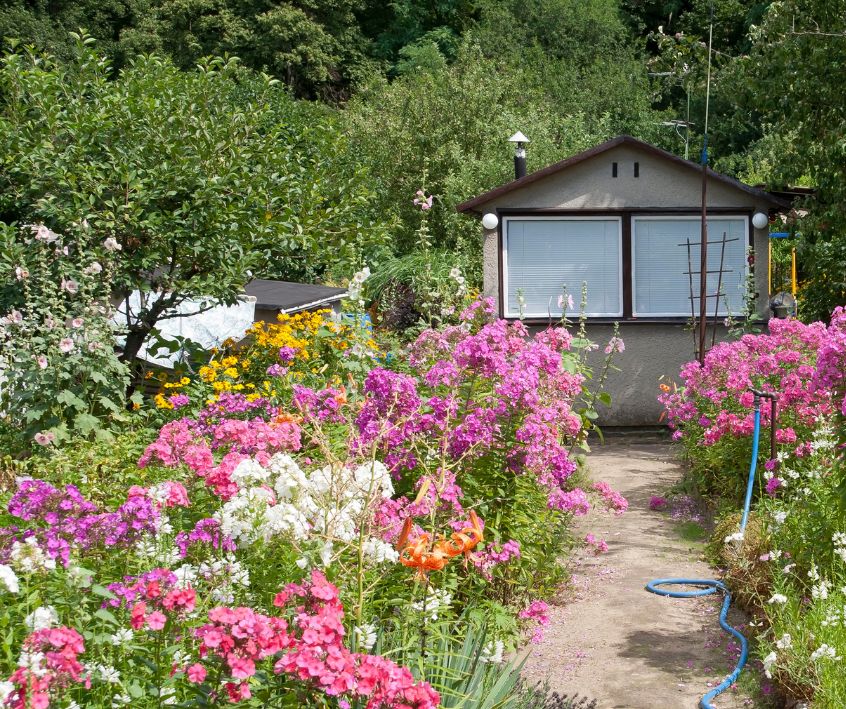
If you live in a place with distinct seasons, warm summers, and freezing winters, you are in a temperate climate. This is the “classic” environment for forest gardening, popularized by pioneers like Robert Hart.
The Strategy: Focus on maximizing sunlight during the growing season and protecting soil during winter. Deciduous trees are your friends here; they provide shade in summer but drop leaves in winter, allowing light to reach the lower layers when the sun is low.
Best Plant Choices:
- Canopy: Chestnut, Walnut, or standard Apple trees.
- Shrubs: Hazelnuts, Currants (black, red, white), Gooseberries, and Elderberries.
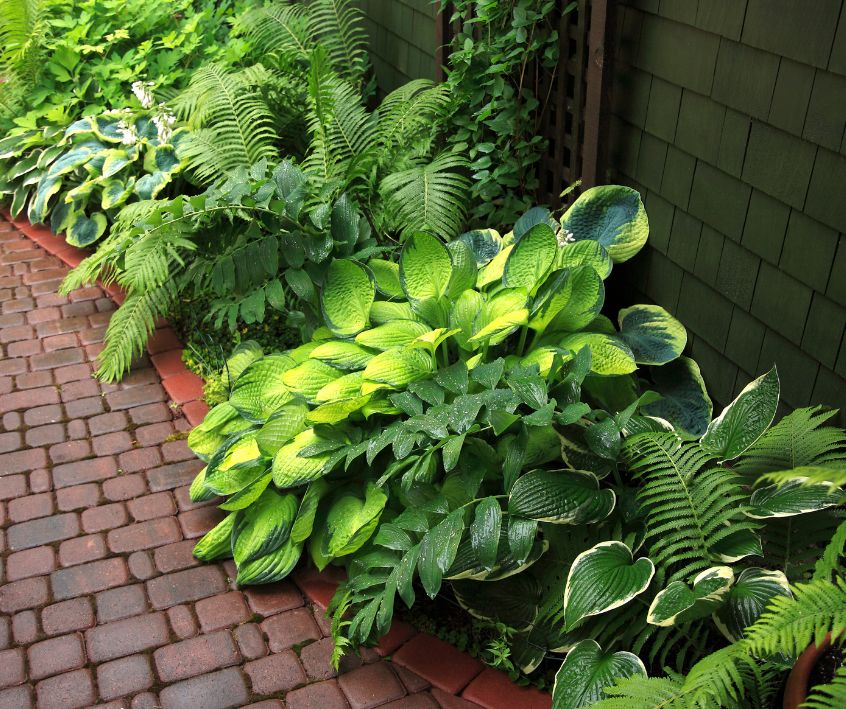
- Herbaceous: Comfrey is essential for biomass (chopping and dropping leaves to feed soil). Hostas are surprisingly edible (the shoots taste like asparagus!), and Mint helps deter pests.
- Vines: Hardy Kiwi (Actinidia arguta) and Grapes.
Beginner Tip: Start with a “fruit tree guild.” Plant one apple tree and surround it with strawberries (groundcover) and chives (pest deterrent). It’s a mini-forest garden that’s easy to manage.
Tropical Climate Forest Gardens
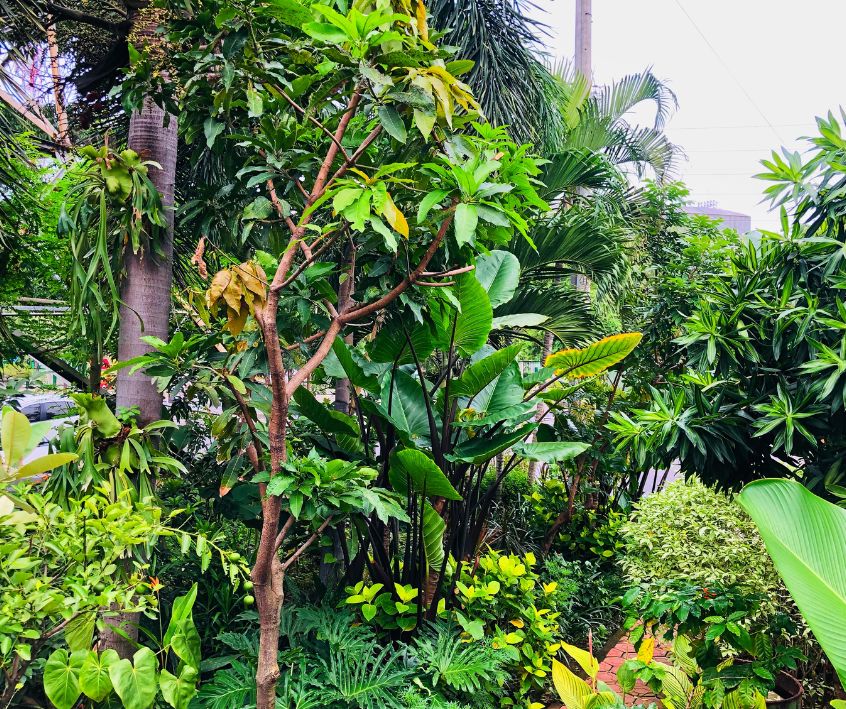
In the tropics, growing never stops. The challenge isn’t surviving the cold; it’s managing intense growth, competition, and sometimes distinct wet/dry seasons.
The Strategy: In the tropics, the canopy is crucial for protecting the soil from baking sun and heavy rains. You can grow incredibly fast here, establishing a food forest in just 2-3 years compared to 7-10 years in temperate zones. Because organic matter decomposes rapidly in the heat, you need to constantly “chop and drop” vegetation to keep the soil fed.
Best Plant Choices:
- Canopy: Mango, Avocado, Breadfruit, or Coconut palms. Leguminous trees like Moringa and Ice Cream Bean (Inga edulis) are fantastic for fixing nitrogen.
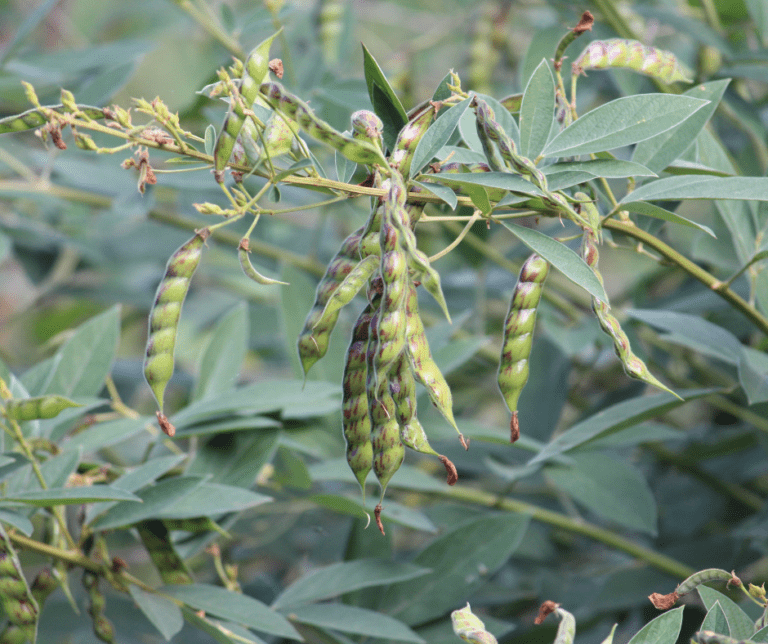
- Shrubs: Coffee, Cacao (chocolate!), Hibiscus, and Pigeon Pea (a great nitrogen fixer).
- Herbaceous: Turmeric, Ginger, Taro, and Sweet Potato (as a groundcover).
- Vines: Passionfruit, Vanilla, and Black Pepper.
Unique Consideration: Be mindful of invasive species. In the tropics, aggressive vines can strangle a tree in weeks. Regular pruning is key to keeping the balance.
Arid Climate Forest Gardens
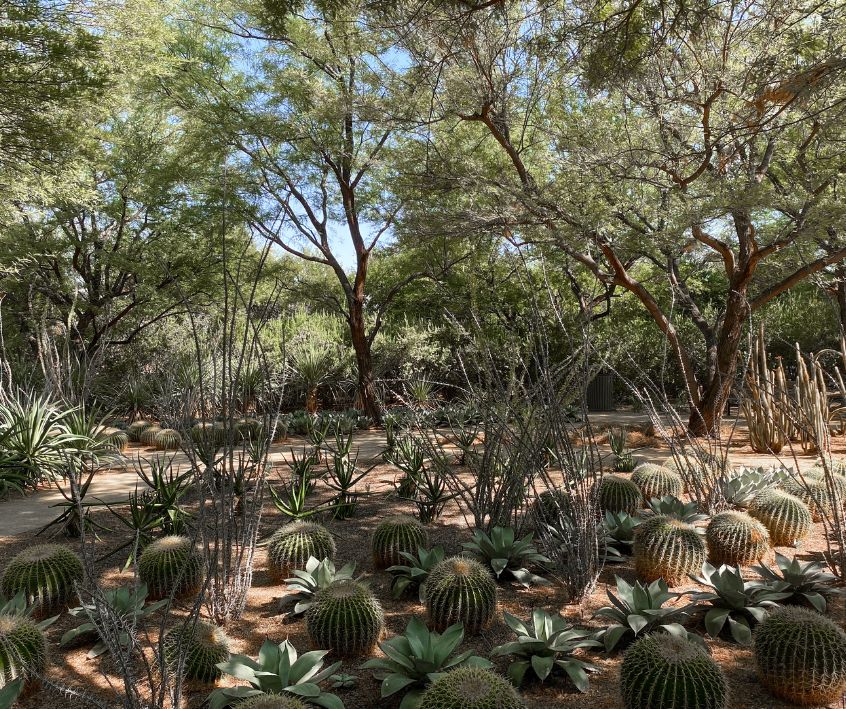
Gardening in a dry climate (desert or Mediterranean) might seem counterintuitive to the word “forest,” but it is entirely possible. You just need to design for water conservation.
The Strategy: Water is life. Before you plant a single seed, shape your land. Dig “swales” (shallow ditches on contour) to catch rainwater and force it to sink into the ground rather than running off. Shade is also vital to reduce evaporation. You want to create a cool microclimate under your trees.
Best Plant Choices:
- Canopy: Date Palms, Mesquite (nitrogen fixer with edible pods), Palo Verde, Olive trees, or Pomegranate.
- Shrubs: Goji berries, Rosemary, Lavender, and Saltbush.
- Herbaceous: Aloe Vera, Prickly Pear Cactus (edible pads and fruit), and succulents.
- Groundcover: Thyme or creeping Oregano, thick, mat-forming plants that keep soil cool.
Water Conservation Hack: Use “ollas”, unglazed clay pots buried in the ground filled with water. The roots grow around the pot and pull moisture through the clay only when they need it, reducing water usage by up to 70%.
Cold Climate Forest Gardens
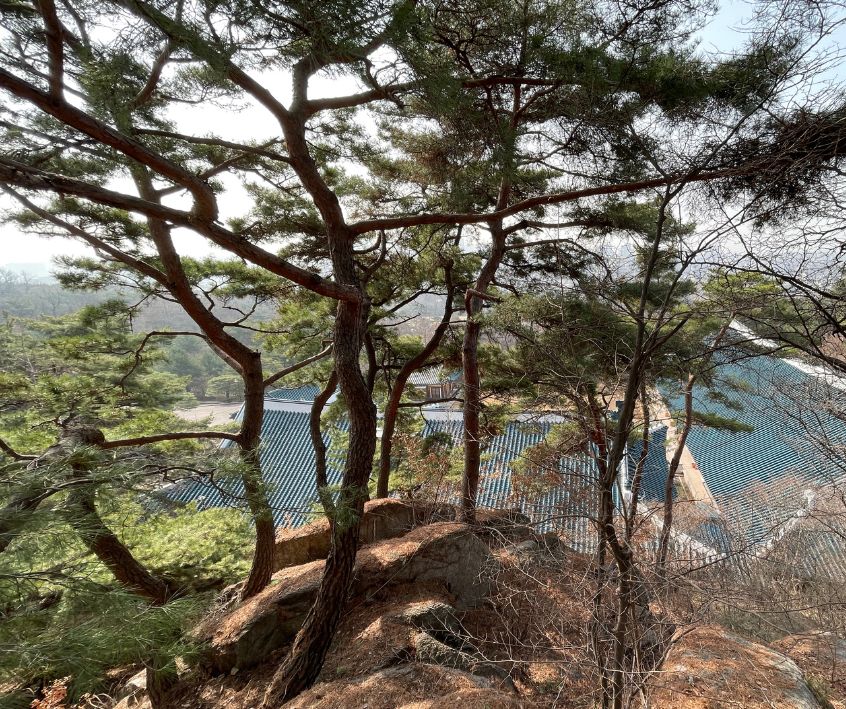
If you are in USDA Zones 3 or 4, you face short growing seasons and deep freezes. But don’t despair, some of the most nutritious berries on earth love the cold!
The Strategy: You need tough plants. Focus on species that bloom late to avoid frost damage on the flowers. Windbreaks (hedges or fences) are essential to protect your garden from drying, freezing winds. You might also rely more on root crops and berries than on large stone fruits.
Best Plant Choices:
- Canopy: Siberian Pea Shrub (nitrogen fixer), Korean Pine (for nuts), or very hardy Apples (like Crabapples).
- Shrubs: Haskap (Honeyberry) is a superstar here—it produces blueberry-like fruit even in zone 2! Sea Buckthorn and Saskatoon Serviceberries are also excellent.
- Herbaceous: Sorrel (lemon-flavored greens that come up early), Lovage, and Rhubarb.
Protection Strategy: Mulch heavily before winter. A thick layer of straw or leaves acts as a blanket, protecting dormant roots from the freeze-thaw cycle that can heave them out of the ground.
Case Studies: Successful Forest Gardens in Different Climates
Seeing is believing. Let’s look at two examples of how these principles apply in the real world.
Temperate Success: The Ness Forest Garden (UK)
Located in a cool, maritime climate, this garden utilizes a dense planting of apples, plums, and pears. Beneath them, shade-tolerant crops like wild garlic and currants thrive.
By using comfrey to mulch the trees, the gardeners have eliminated the need for external fertilizers. The result is a lush, green sanctuary that produces fruit from June through October.
Arid Success: Greening the Desert (Jordan)
Geoff Lawton’s famous project in the Dead Sea Valley demonstrates the power of water harvesting. In a landscape that looks like the surface of Mars, Lawton utilized swales to capture rare flash floods.
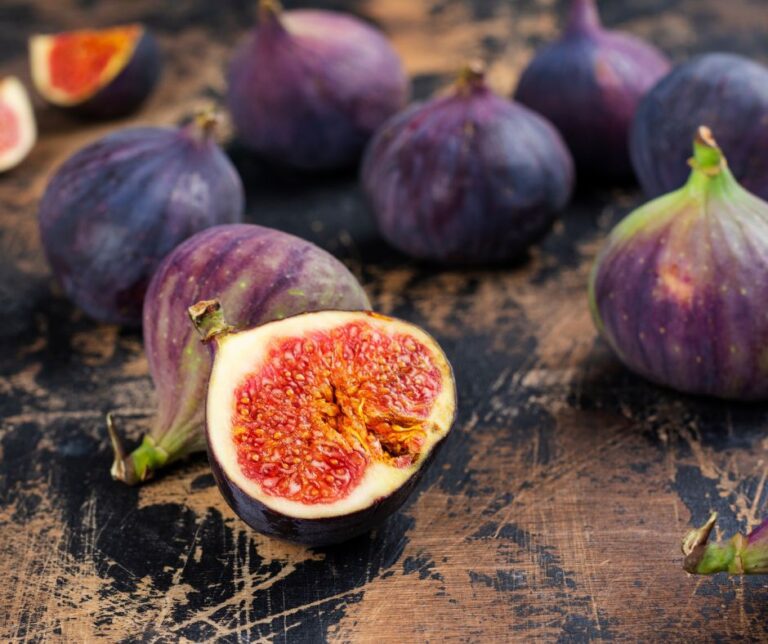
He planted hardy pioneer trees (like Mesquite) to shade the soil and fix nitrogen. Once the shade was established, he introduced figs, citrus, and dates. Today, it is a lush oasis proving that if you harvest water, you can harvest food anywhere.
Resources and Further Reading
Ready to dig deeper? Here are some essential tools and communities to help you on your journey.
Books:
- Creating a Forest Garden by Martin Crawford (The bible for temperate climates).
- Gaia’s Garden by Toby Hemenway (Excellent for home-scale permaculture).
- Edible Forest Gardens by Dave Jacke and Eric Toensmeier (For the deep-dive science nerds).
Online Tools:
- Plants for a Future (pfaf.org): An incredible database where you can filter plants by hardiness zone, use, and soil preference.
- Local Extension Offices: In the US, your local university extension office can provide free advice on soil testing and pests specific to your county. For example, I live in Arizona and often refer to The University of Arizona Cooperative Extension website.
Community:
Look for local “Permaculture Meetup” groups or native plant societies. Gardeners are generally generous people; you’ll likely find someone willing to share cuttings or advice!
Conclusion: Embrace the Potential of Forest Gardening in Your Climate
Starting a forest garden is an act of hope and a commitment to the future. It transforms your relationship with your land from one of control to one of stewardship.
Whether you are planting a single fruit tree guild in a suburban lawn or reforesting a rural acre, you are contributing to biodiversity and your own food security.
Remember, nature is forgiving. You don’t have to get it perfect the first time. Start small, observe what works, and grow from there. Every climate has its abundance—you just have to plant the right seeds to find it.
So, grab your shovel and some compost. Your future harvest is waiting.
Visit the Garden Resources page for supplies and inspiration. Don’t forget to subscribe to the Calendula’s Garden Newsletter for more gardening tips.
Calendula’s Garden is reader supported. When you buy through links on our site, we may earn an affiliate commission. As an Amazon Associate, I earn from qualifying purchases. For more information, view our Disclaimer page. Thank you!