Combatting Aphids: Tips for Thriving Greenery
Calendula's Garden is reader suported This post may contain affiliate links, more on our Disclaimer page. Thank you!

When it comes to nurturing a thriving garden or maintaining vibrant houseplants, few challenges can be as frustrating as dealing with aphids.
These tiny, sap-sucking insects are notorious for their ability to damage plants, leaving gardeners and plant enthusiasts searching for effective solutions.
In this guide, we’ll walk you through everything you need to know about identifying and managing aphids, and ensuring your plants remain healthy and vigorous.
Identifying Aphids
Before you can tackle an aphid problem, you need to know what you’re dealing with. Aphids are small, pear-shaped insects that come in various colors, including green, black, brown, and even pink.
They typically congregate on the undersides of leaves, around new growth, and on plant stems.
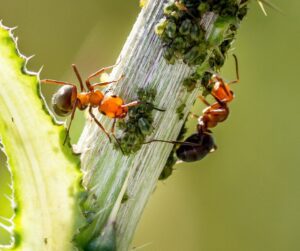
To spot them, look for clusters of these soft-bodied insects in these areas. You might also notice a sticky substance on leaves, called honeydew, which aphids secrete. Honeydew is full of concentrated sugar which attracts ants.
You will often find ants actively managing aphids as a food source. So it may be necessary to control the ant population as well as the aphids. We use TERRO Outdoor Ready-to-Use Liquid Ant Bait Stake Traps
Over time, this substance can lead to the growth of sooty mold, further impacting plant health.
The Impact of Aphids
Understanding the damage aphids can cause is crucial for effective management. These pests feed by piercing plant tissues and sucking out the sap, which weakens the plant.
Infested plants may exhibit curled or yellowing leaves, stunted growth, and reduced yields in fruit-bearing plants.
Additionally, aphids can transmit plant viruses, compounding the damage they inflict. Given their rapid reproduction rate, it’s important to address an infestation early to prevent significant harm to your plants.
Prevention Techniques
Preventing aphids from gaining a foothold in your garden or on your houseplants can save you considerable effort in the long run. Here are some prevention tips:
Healthy Plants: Start with robust plants, as healthy plants are less susceptible to pests. Ensure they receive adequate water, sunlight, and nutrients.
Companion Planting
Plant aphid-repelling companions like garlic, chives, and marigolds to deter these pests.
Avoid Over-Fertilizing
Excessive nitrogen in fertilizers can promote lush but weak growth, which attracts aphids.
Maintain Plant Diversity
A diverse garden can naturally regulate pest populations by attracting beneficial insects.
Natural Control Methods
For those who prefer organic solutions, several natural methods can effectively control aphid populations:
Beneficial Insects
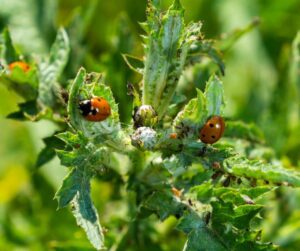
Ladybugs, lacewings, and predatory beetles are natural aphid predators. You can purchase these from garden centers to introduce them to your garden. We order beneficial insects from Arbico Organics when necessary.
Neem Oil
This organic insecticide disrupts aphids’ feeding behavior. Mix neem oil with water and spray it on affected plants. Bonide Captain Jack’s Neem Oil
Soap Solution
A simple mixture of water and dish soap can suffocate aphids. Spray it directly on the infested areas, ensuring thorough coverage.
Water Blast
Use a strong stream of water to dislodge aphids from plants. This method works well for minor infestations and does not harm the plant.
Chemical Control Options
In cases where natural methods are insufficient, chemical control might be necessary. For example when we put in a new garden a natural food web hasn’t been established and there are not enough natural predators around to control aphid populations. This would be an instance where chemical control can help. Here’s how to approach it safely:
Select Appropriate Pesticides
Choose pesticides specifically designed to target aphids. Look for products labeled as safe for use on edible plants if you’re treating fruits or vegetables.
Safer Insect Killing Soap Concentrate for Plants
Follow Instructions Carefully
Always read and follow the manufacturer’s instructions to ensure safe application and effective results.
Use as a Last Resort
Chemicals should be the last line of defense. Over-reliance on pesticides can harm beneficial insects and lead to resistant aphid populations.
Monitoring and Maintenance

Ongoing vigilance is key to preventing future aphid problems. Regularly inspect your plants for signs of aphids and other pests. Keep your garden tidy by removing debris and weeds that can harbor aphids.
Consider setting up a schedule for routine checks and maintenance, ensuring that your plants remain healthy and resilient against potential infestations.
Final Thoughts
Dealing with aphids requires a proactive approach, combining identification, prevention, and control methods. By maintaining healthy plants, using natural predators, and resorting to chemical solutions when necessary, you can keep your garden and houseplants aphid-free.
We’d love to hear from you! Share your own experiences and tips for managing aphids in the comments, and inspire fellow gardeners to achieve greener, healthier spaces.
Visit the Garden Resources page for supplies and inspiration. Don’t forget to subscribe to the Calendula’s Garden Newsletter for more gardening tips.
Calendula’s Garden is reader supported. When you buy through links on our site, we may earn an affiliate commission. As an Amazon Associate, I earn from qualifying purchases. For more information, view our Disclaimer page. Thank you!